Category: News Update

  • Three-day printing and signage tech expo begins

    Three-day printing and signage tech expo begins

    Lahore: Punjab Minister for Industries, Commerce and Investment Mian Aslam Iqbal has said that the provincial policies about industry and skilled labor are in final stage and they would be announced soon.

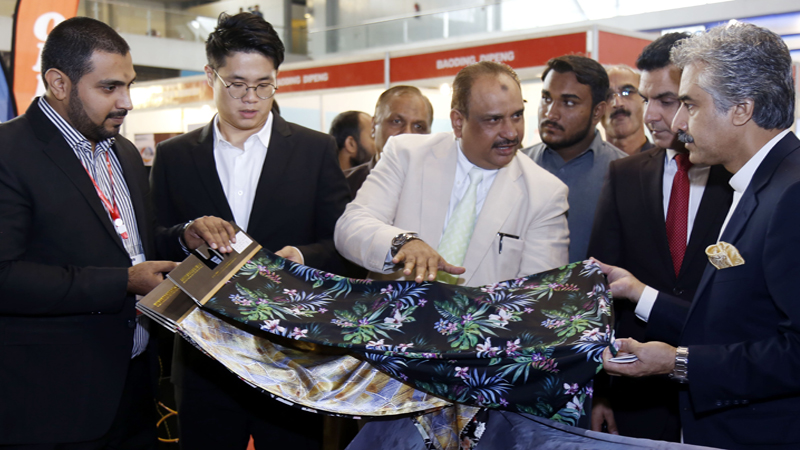
    Speaking at the inauguration of landmark three-day Digital Printing, Machinery & Signage Technology Exhibition (DPS World) here at Expo Center Saturday, he said we are taking efforts to promote industry and commerce sector in the province. He said almost all things about our 100-day plan have already completed and we will have a meeting with Prime Minister Imran Khan on November 07, where we would give a presentation on our policies on industry, skilled labor, giving loans to youth and other related matters.

    “Our follow up meetings on these issues are under way with Punjab Chief Minister Usman Buzdar.” He said in past the crucial industries department was given a serious focus but this time we are committed to revamp this important sector. He said industrial sector is a key for creation of jobs and improving economy, boosting exports and earning foreign exchange.

    He said, “We are also giving focus on export zones where tax holidays and other incentives would be given to the industrialists and investors.” He added this landmark Digital Printing, Machinery & Signage Technology Exhibition (DPS World) will set new standards in the digital printing and signage industry of Pakistan.

    However a large number of visitors thronged the Expo Center to witness the DPS World exhibition, which has provided an ultimate platform for consistently evolving industry of digital printing, graphic imaging and signage where visitors and exhibitors correlate with printing manufacturers and producers, technologists, graphic architects, latest industry trends, design houses and interior designers surrounded by marketing and media professionals.

    M Saleem Khan Tanoli, CEO FAKT Group said: “Holding of the exhibitions is aimed to create a platform for potential buyers and sellers from different parts of the world so that they could exchange their information about the ground-breaking digitization solutions with local businessmen and entrepreneurs. These experts from around the world will also help participants to choose the best possible machinery and technology that can suit their business needs.

    He said with this kind of Digital Printing & Signage Technology Exhibition, FAKT is setting new standards in the digital printing and signage industry of Pakistan. It will open up more doors for the Pakistani finished products in the international market down the road.

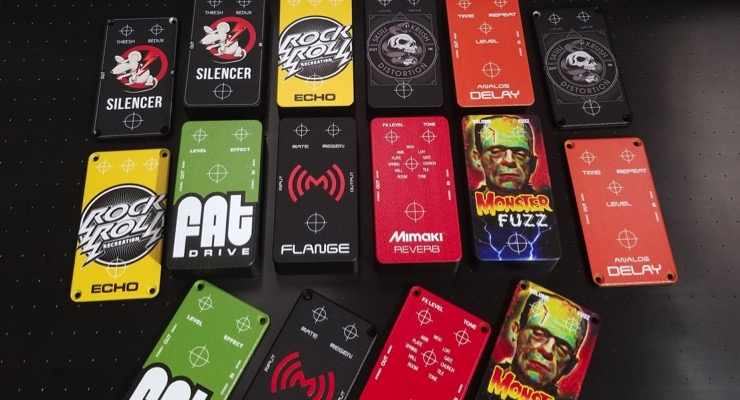
    Tanoli also mentioned that in DPS 2018 more than 125 companies from 25 countries are participating from countries like China, Turkey, UAE, UK, USA, Japan, Pakistan and many more. Some big names that are exhibiting this year includes SPG Prints, ATEXCO, MS Printing Solutions, Sign Trade, Sabri, GR Trading, Awami Traders, EPSON Robustelli, Mimaki, Grapho Scan Supplies, Cubetex and many more. “We are expecting around 10,000 visitors for this year’s mega event,” concluded Tanoli.

  • Digital Printing Has Come a Long Way

    Digital Printing Has Come a Long Way

    Inkjet ink leaders discuss how the digital printing industry has evolved through the years.

    Over the years, the printing industry has seen inkjet make sizable gains in many segments. From the early days of transactional printing to the widespread adoption of wide format, digital printing has moved steadily across the world of printing. Today, label and narrow web has had widespread adoption of  inkjet technologies, an the ceramic tile market is almost all digital.

    In “The Future of Digital vs. Offset Printing to 2022,” Smithers Pira’s Sean Smyth reported that digital printing accounts for 16.2% of the global print market value. In addition, digital printing accounts for 2.9% of volume, up from 2.1% in 2012, and Smyth anticipates it reaching 3.9% of volume by 2022.

    In discussing these changes, ink industry leaders say that they anticipated digital’s growth, although some of the segments are different than they expected from five years ago.

    Stephen Emery, VP of ink and new business development, EFI, noted that there has been quite a lot of momentum behind digital, adding that he does not believe the growth has exceeded market expectations in core applications like signage and graphics. He also sees many more markets transitioning over to digital.

    “Certainly in ceramics, the level of digital decoration now compared with five years ago is very encouraging,” Emery added. “In textile, from an ink perspective, there are a lot of variables with regards to different types of inks used depending on the type of fabric printed or the end-use application of the job. But there has been tremendous growth in soft signage, and that’s a market where we have really developed a high-performing platform for signage providers adopting fabric printing with an aqueous ink that can be used in direct-to-fabric and transfer paper applications.

    “Between the many different markets in play, it almost as if there is a crisis of opportunities with the number of applications customers have that need to transition to digital print,” Emery added.

    Josh Hope, senior manager, Industrial Printing business development and marketing for Mimaki USA, said that even five years ago, the direction of wide format digital printing was clear.

    “The distance we have traveled down that path has been pretty amazing,” added Hope. “We have seen customers take the advances in technology and further push the boundaries, which is very exciting to see. One of the most surprising applications has been the advent of full color 3D printing. We are still at the beginning of the technology curve and can only expect that the next few years will be impressive.”

    “We are not surprised at the expansion within the digital market. However, there are a few applications including direct-to-object or direct-to-shape printing that have grown more quickly than anticipated,” said Jim Lambert, VP, GM – Digital Division, for INX International Ink Co.

    “Outside of the sign and graphics market,” added Lambert, “the potential for growth in the digital printing market is tremendous.”

    “It is always difficult to predict the exact penetration of a technology either in size or in timet,” Dr. Christophe Bulliard, marketing director, Sensient Imaging Technologies SA, said. “Nevertheless, we knew several years ago that digital printing could contribute to the development of new businesses and business models and that it would become really significant as soon as these models would be in place. A typical example is fast fashion, but there are many others. Interesting areas are where the digital printing itself offers more economical process than traditional methods include ceramic, color filters, etc.”

    “Having been at the cutting edge of the digital inkjet chemistry for more than 25 years, the growth seen in recent times is in line with both SunJet’s and the market’s projections,” Peter Saunders, business director – Digital, SunJet, the inkjet division of Sun Chemical and DIC, observed. “Additionally, the growth in market sectors, such as packaging and textile, has been predicted for some time with many of the market moves being predictable due to the time it takes to build solutions and gain market approvals.

    “Looking back over the last five years and possibly a little bit longer, the biggest surprises would have been the speed that the ceramic sector adopted digital, something which has arguably not been seen again since,” added Saunders. “In contrast to this, the speed of adoption of aqueous ink technologies in some sectors have been slower than we would have anticipated, but with gains in ink functionality, such as Aquacure, combined with printhead and printer capability, it’s certainly gaining momentum now.”

    Don Duncan, former director of research at Wikoff Color, noted that explosive growth has been predicted for over two decades.

    “I recall a meeting in the R&D department of a very large US ink company in 1995 when it was predicted that litho and flexo were only five years from complete demise,” Duncan added. “Litho and flexo are still with us, but that ink company is under different ownership. Perhaps the biggest surprise has been the adoption of digital printing as a supplementary tool, rather than a direct replacement for litho and flexo. While inkjet has seen impressive growth patterns, it is somewhat more conservative than original predictions. We see inkjet as a market with an upward growth trend and continue to invest resources to grow along with the market.”

    “Having been a part of the graphic and industrial print industry for nearly 100 years, we are rarely surprised at the expansion of a new technology, and do our best to anticipate the changes,” said Rich Dunklee, global market segment manager – UV inkjet inks at Nazdar. “We have been working in inkjet for close to 30 years, and are pleased to be part of an industry that has worked very hard to increase the efficiency and productivity of inkjet equipment to get us to the state that we are seeing today.”

    So what are the next technologies to make the switch to digital? Emery said that textile, packaging, flooring and thermoformable parts are of interest to customers.

    “There are many industrial applications, such as fabric apparel and décor, that are rapidly adopting digital printing. Corrugated packaging is another industrial area where there is tremendous opportunity, as is wallcoverings,” said Emery. “There is a lot of upside in what EFI customers are doing using our thermoformable inks as well. Some of that work is in the signage space, but the inks’ ability to stretch creates additional opportunities in packaging, automotive and marine body parts, luggage – a whole range of product decoration uses that help redefine what digital print will be in the future. Beyond ceramic tile, there’s much more opportunity in industrial flooring such as wood and laminates and we are doing much more work on ink and printer platforms that can be used for that.”

    Evan Benbow, director of R&D at Wikoff Color, said that he doesn’t anticipate digital printing to completely displace incumbent technologies, but does expect it to supplement existing print technique, particularly on non-flat surfaces..

    “Digital printing can help converters keep up with the market trends of customization, just-in-time delivery and continuously shrinking run sizes,” Benbow noted. “With the addition of digital technologies, converters are able to service customers that they previously couldn’t. In addition to opening the door for shorter run lengths, inkjet’s biggest strength is the ability to print on non-flat substrates, where incumbent technologies sometimes struggle. Inkjet is making product decoration of unusually shaped items possible where it never was before.”

    “Industrial printing – UV flatbed printing in particular – has very strong growth potential,” Hope said. “We are seeing more advancement into both the screen and pad printing markets by digital UV printing technologies.”

    Dr. Bulliard observed that one of the key interests for the development of digital printing is the opportunities it opens in revising totally the supply chain of finished goods.

    “It allows not only just-in-time and economical creation and delivery of variable (whether customized or personalized) designs, but also significant reduction of inventory by adding variable data of packaging print on the production line,” Dr. Bulliard said.

    While Sun Chemical’s R&D team is working to advance its current inkjet technology, Saunders said it is unlikely that any one “incumbent” technology will be completely displaced by new developing technologies.

    “The reality is that the inks used in all digital printing sectors are very different,” Saunders noted. “In fact, the substrates and requirements of ink performance are so different that


    Tumore prostatico: la prognosi in base a stadio, grado e rischio

    Tumore prostatico: la prognosi in base a stadio, grado e rischio

    we have to have separate R&D groups working on the needs of each application. The common factor is that the inks all need to jet and function reliably, so the understanding we have gained of the influence of ink chemistry on the physics of inkjet printing is essential in all ink development.

    “The digital value proposition continues to gain momentum as run lengths in many conventional print markets reduce,” Saunders added. “In addition to this, market trends continue to demonstrate the wish to reduce lead times and improve the efficiency of print processes against the backdrop of increasing numbers of products and levels of complexity. As a result, markets such as digital packaging and textiles continue to grow market share year on year.”

  • Digital printing will spark revolution in textile industry: LCCI

    Digital printing will spark revolution in textile industry: LCCI

    LAHORE: 

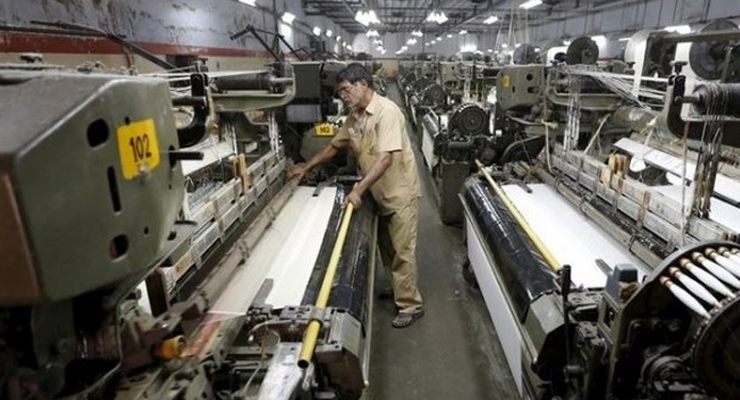
    The Digital Printing and Signage Technology Exhibition brings modern machinery and equipment, which will spark revolution in the textile and printing industry in coming years, leading to job creation and higher industrial growth.

    These were the opening remarks of Lahore Chamber of Commerce and Industry (LCCI) President Malik Javed Tahir at the three-day 3rd International Digital Printing and Signage Technology Exhibition.

    The event began on Friday at the Lahore Expo Centre and around 150 local and foreign companies participated in the fair.

    Tahir said foreign companies were exhibiting their products for joint ventures with local companies, which was beneficial for Pakistan’s economy as local companies would be able to manufacture modern equipment to save capital.

    He urged the Trade Development Authority of Pakistan (TDAP) to facilitate local manufacturers in importing latest printing technology.

    Responding to a question, he said the government had imposed unjustified regulatory duties on the import of raw material, which would be resisted by the business community at all levels.

    “Around 500 textile units have already been closed due to unfavourable government policies,” he remarked.

    Speaking on the occasion, Inks Global EMEA APAC Commercial Director Rudy Grosso said their ink technology had a great potential in the Pakistani textile market. “We will start from textile and go to food and other innovative industries in Pakistan for digitalisation purposes.”

    Published in The Express Tribune, October 21st, 2017.

  • Digital textile printing market to grow 18pc by 2021

    Digital textile printing market to grow 18pc by 2021

    The digital textile printing market is expected to grow at an impressive compound annual growth rate (CAGR) of more than 18 per cent globally till 2021, according to a recent data.

    International Expo Consults (IEC), part of Falak Holding, has earmarked textile printing, digital signage, LED as the sectors to watch out for in 2018.

    Sign & Graphic Imaging Dubai 2018 (SGI Dubai 2018), the Middle East’s largest printing, signage and graphic industry show, which opened yesterday (January 14) caters to the needs of exhibitors and visitors in the LED and textile printing industries apart from signage, outdoor media, screen and digital printing industries.

    The show will run until January 16th at Halls 4, 5, 6, 7 and 8 within the Dubai World Trade Centre.

    Sharif Rahman, CEO, International Expo Consults, organiser of SGI Dubai 2018, said: “Some of the highlighted areas at the show to be considered are heat transfer technology, décor printing, digital textile printing, fabric printing and wall graphic among others.”

    Europe, Middle East and Africa (EMEA) commands a dominating position worldwide in the case of textile and clothing market and thereby occupies the largest share in the global digital textile printing market, said a statement.

    UAE’s textile market is the second largest trading market, next to oil; and is expected to further grow from 2017 – 2021 due to the lower cost of raw materials. This acceleration in the textile market is expected to grow the digital textile printing market in the five-year period, it added.

    Rahman continued: “Advantages of LED lights over incandescent and fluorescent lamps are the foremost factor driving the LED lighting market growth.”

    “Additionally, the energy efficiency factor, increased brightness, and a larger lifespan are some of the major reason LED lighting enjoys tremendous market opportunities in the years to come. The never-ending cycle of new product launches utilising the most innovative technology by the manufacturers keeps the global population interested in the technology,” he added.

    According to a report, the global LED lighting market was valued at $26.09 billion in 2016. The figure is expected to increase to $54.28 billion in another six years, accelerating at a CAGR of approximately 13 per cent from 2017 to 2022.

    The Middle East and Africa region will also display significant growth in the near future. Especially the UAE and Saudi Arabia are expected to display conspicuous market share going forward. Another report highlighted that the GCC LED lighting market will witness a CAGR of 16.8 per cent in the 2015– 2020 time period. Sales at the end of term would amount to $1.9 billion.

    Rahman said: “2017 saw an increased consumption of video content, a factor that makes ignoring digital signage very risky. With advertisers creating engaging content which captures the imagination of the consumers, digital signage will play a huge role in promoting brands all over the world.”

    “The construction boom in the run upto Expo 2020 will also create demand in many commercial installations,” he added.

    During the recent years, growth in the advertising space has given great business to the digital signage industry. Over the world, the growth of digital signage market is driven by the increasing demand in the retail sector. Globally the segment is growing at a rate of 8.21 per cent in the next 5 years.

    The spurt is primarily due to significant technological advancements complemented by dwindling manufacturing costs. An industry expert commented that country has witnessed roughly 25 per cent growth in the previous year but is expected to grow rapidly to nearly 50 per cent in the next three years, building up to the Expo 2020 event.

    The SGI Dubai 2018 show is hosting several events during the three-days including ‘Knowledge Series’ – a panel discussion involving some of the biggest names in the regional market; ‘Wall of Fame’ –  competition for the most creative artwork of 2017 and ‘Masters of Wrap’ – a car wrapping competition in collaboration with Avery Dennison and Strings International.

    The event welcomed over 300 global exhibitors from across 35 countries around the world. Thousands of people from over 70 countries have already visited the show, it stated. – TradeArabia News Service

  • 5 future digital signage trends of 2018

    5 future digital signage trends of 2018

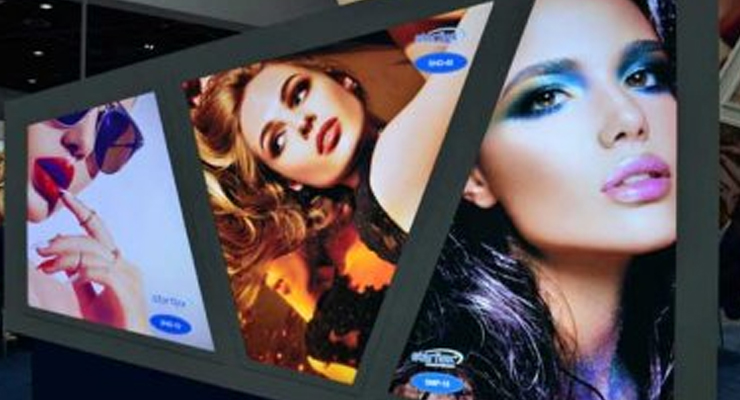
    2017 was an innovative year for digital signage, and 2018 promises to have even more going on. Both organizations and the public have embraced the digitalization of…well, everything…and they want more.

    Displays get cooler

    Screens are going to get even wider than they are now, yet slimmer than ever before. The advance word is that technology for reflective displays —full color e-paper displays that are flexible and less than a micrometer thick that reflect light rather than emitting it, like real paper — has made some serious breakthroughs. In the interim, 2018 should see a 42-inch black and white e-paper display hit the consumer market. Refresh rates for these displays still prevent using rich video, but many organizations are taking to E Ink® screens. They’re cheap to buy, cheap to use and mobile.

    LCD screens will see much higher resolutions. 2018 will be the year that UHD becomes the new standard. And there’ll be more colors as well, as the industry moves from sRGB to BT.2020, which not only has 4K and 8K resolutions of 3840 by 2160 and 7680 by 4320, but frame rates of up to 120p, and boasts a color field that is very possibly greater than what the human eye can actually perceive.

    Video walls are becoming more commonplace in all sorts of configurations, with non-rectangular displays, ultra-thin bezels and more. Expect to see the number of video walls increase exponentially throughout the year.

    One innovation currently being developed for screens is the use of haptics. Electrostatic fields can fool human fingers, stimulating nerve impulses that register in the brain as various physical textures – smooth, bumpy, rough etc. The haptic technologies being developed will be overlays that can fit over any existing touchscreen, and add a totally new dimension to interactive displays.

    Content gets more responsive

    The trend of increased personalization and interactivity we saw this year will continue in 2018. While there are still challenges in creating a truly individualized experience at the screen, there will certainly be advances made as data flows improve to influence the point of customer contact.

    2018 will see a huge increase in responsive and automated content. Sensors on the actual displays, as well as data feeds from computers and the web, will adjust content according to real-world conditions. If it looks like rain, ads for umbrellas and indoor activities will be shown; if it’s sunny, maybe the displays will decide to show ads for a local water park or an outdoor music festival. The playlist will no longer be entirely in the hands of the people scheduling content – computers will make certain choices based on external data correlations.

    Smart gets smarter

    Smart programs and AI are entering the field, allowing an unprecedented scaling of data analysis and integration. Data feeds will become messages in their own right, without outside intervention. Just like the CAP alert system can automatically trigger localized alerts based on data coming from outside sources, digital signage systems will be able to target messages to specific displays based on the data they are receiving and analyzing.

    This will allow better integrated and linked promotions. Systems will be able to act like a team member in their own right —sifting through enormous amounts of information and making suggestions as to what content should be displayed where, and when. This will allow cross-promotion on a completely new scale. Layered, integrated campaigns that combine with people’s mobile technology (smartphones and the like) will truly be possible.

    Physical and digital blur

    People already spend an astonishing amount of time connected to the online digital world, and this will just become more prevalent. In fact, 2018 will continue the major trend of the foreseeable future: the blurring of the lines between the digital and the physical world.

    We will see much more Augmented Reality and Virtual Reality  In addition, 2018 should see more integration of digital signage and technologies into real-world events. Displays will not only show messages promoting events, they will become integral parts of the events themselves. There will also be a dramatic increase in the amount of outdoor digital signage, from huge displays to small interactive kiosks, some of which will be able to interact with a person’s smartphone or tablet.

    Beacons and geofencing will finally come into their own in 2018. When people enter a designated area, they will receive prompts to download an app that will allow them to interact with the invisible but information-rich world on site —digital messages sent right to their device, turn-by-turn wayfinding directions and much more. The separation between the digital and the physical, as well as the organizational and the personal, is eroding and becoming much more of a single, multi-channel experience.

    Narratives make more impact

    The next year will also see a preference for campaigns and long-tail narratives over more traditional one-shot messages. Thinking long-term and creating communications that are far more than simple ads will be key to cutting through the huge amount of information flowing around people. And research shows that Millennials, the fastest growing segment of consumers and the workforce, dislike direct marketing. They prefer more indirect approaches like narratives and stories that incorporate the sales message, content marketing and influencer marketing.

    Companies are now behaving in a similar fashion – they are starting to prefer comprehensive solutions rather than individual products. Digital signage providers that offer a smorgasbord of options such as cloud-based hosting, content creation or curation, interactive designs, consulting, etc, will have more success than companies that simply have a widget to sell. People are looking for relationships that last over time. Even Microsoft Office has gone the subscription route, and both individuals and organizations show they prefer this perpetual approach to one-time purchases.

    More, better faster

    2018 is poised to be the most exciting year yet in digital signage. Things are getting more integrated, more comprehensive, faster, smarter, and better looking.

    But remember that all this technology is built around people – to streamline workflows, enhance communications, increase engagement and build community. So, make sure that 2018 is the year of the customer for you. Relate to your audience as human beings, and not just as a source of income or consumers of your product. Give them what they want, and what they want is more access to more comprehensive, more personalized communications

    Image via Istock.com.